Hopes and Dreams

Sorting through the past and creating new narratives.
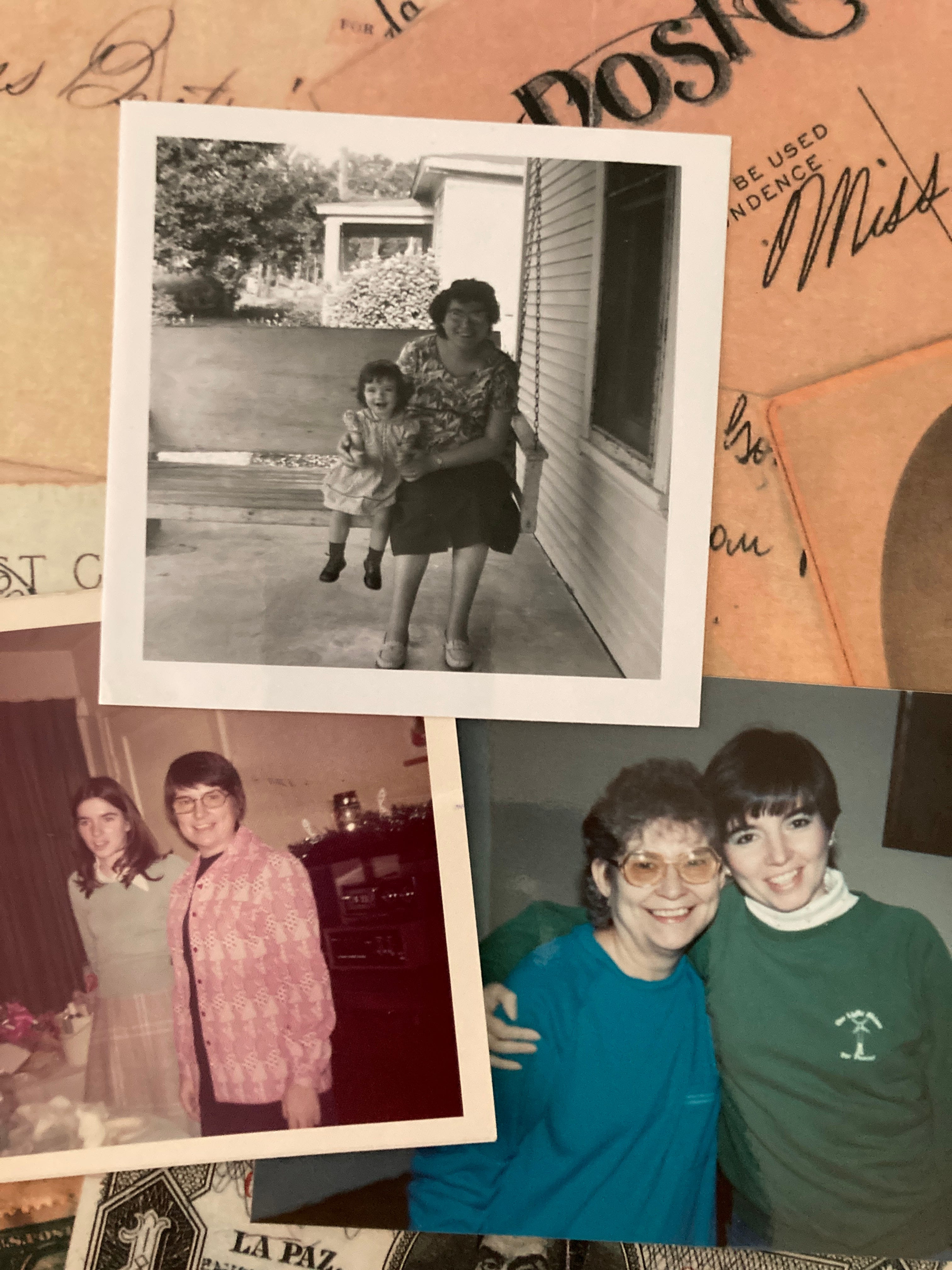
This past weekend, I opened my mom’s cedar hope chest and removed everything inside. Many times I’ve expressed the desire to move it along, but I wasn’t ready. It doesn’t really fit any rooms in my house, and it’s taking up a space where I’d like to put a chair. I’ve moved it with me to five different homes. I’ve used the hope chest as a coffee table, a TV stand, and a place to set a basket for my cat. 

My parents bought a new bedroom set, which included the hope chest, when our family moved into a big new house in the 1960s. My dad was making money as an insurance agent, and things were looking up for us then, before the divorce. For almost 30 years the hope chest sat at the end of her bed. When Mom downsized and moved a couple of times, she kept the bedroom set. At the senior apartment complex where she died, I took most of her belongings to the common room to give away. Another tenant could use her bed and dresser. One of the few things I saved for myself was the hope chest and the large philodendron sitting on it (which I still have).

Why is it so hard to part with material things, especially something that represents a loved one or an emotional connection? Watch an episode of “Hoarders” and you’ll see this at its extreme. In the show, often a loved one has died and rather than part with their things, a family member simply moves it all into their own house. I can understand that; I recently wrote an essay called “Hanging On to a Memory” about the toy box my dad made when I was a little girl, which sits in my basement. My family life was unhappy and my dad a disappointment, yet the toy box reminds me of his young self, and the promise of what he could have been without bad choices and alcoholism.

My relationship with Mom was completely different. I was her best friend from birth, and when my dad left her 13 years later, I became her emotional caretaker. I can’t remember not knowing the sad story of her life…of her mother dying when she was two, separation from her four sisters, and her adoption into a poor and socially awkward family. The story of her life became my life; my purpose was to comfort her, or save her, or at the very least, try to protect her. Even now I wish I had done more, but I learned you can’t make someone else be happy.

Upon opening the lid of the hope chest, an attached shelf lifts up. My mother placed a little spiral-ringed notebook there in which she’d chronicled her life story. The first line reads, “I never knew my mother.” It’s the saddest thing I’ve ever read. But, I remember she used to say she “felt like she came out from under a rock.” She missed having a connection to her origins. Maybe this helped prove her own existence to herself. Maybe knowing the little notebook was in there kept me from opening the hope chest again for so long.

There were other treasures inside: Drawings and school projects my mom did as a child, showing an artistic flair I don’t remember; my first shoes; a baby quilt; my round blue dance case with tights and ballet slippers; children’s uniforms and badges of mine and my brothers; and, an unfinished quilt top. She couldn’t know that I’d one day become a quilter. A packet of letters from the innocent beginning of my parents’ young romance. At one time I’d added my son’s Army uniform, and an Army blanket from visiting him in Germany. These days I find it difficult to separate the good thoughts from the sad ones. Every day, every event, every item brings a complicated stream of emotions.

Our parental relationships are complicated. A man and a woman partner to provide our DNA but we are not the whole of either of them. We may see their faces reflected in the mirror, but our hearts and minds become uniquely our own. When I realized in my own adulthood how young my mom and dad were when they married and soon had me, and considered their own childhoods and upbringing, how could they have known anything about marriage or raising a child? After years of feeling disappointed, I lowered my expectations. Eventually I forgave them. Then I forgave myself for judging them. I did the same dumb thing, married at 19, had a baby at 20. We literally knew nothing. It’s a wonder any of us survive or flourish.

My mom called me “sweetie heart.” Even through hard times, we shared a sense of humor and laughed together. She taught me how to sing harmony. I love my mom, and I miss her every day. But I don’t need the hope chest to keep those special memories alive. It represents her life, not mine, and I’m ready to let it go.

I lovingly lifted each thing out of the hope chest, spent time looking and touching them, and transferred the items to a storage box for the attic. I’m giving my son’s Army uniform to my grandsons, now adult men. I’m looking forward to finishing the quilt. My husband brought a moving dolly upstairs, we turned the chest vertically on its side, and carefully eased it down the steps and out to the garage. I offered it to my niece, and if she decides it’s not for her, I’ll find it another home. The hope chest is ready to fill with new hopes and dreams.

Wednesday, December 7, 2022

Today is Wednesday. Wednesday comes around once a week and we repeat our routines, meetings, and tasks like any other day. But this Wednesday, December 7, has special significance to me. Forty-seven years ago, in 1975, I gave birth to my son. Benjamin Grant Davis, 20 inches long, 6 pounds 2 ounces. It was a day of many feelings…joy, wonder, love, excitement, fear. On that day I became a mother. I had no idea what I was doing, and no idea of what was to come.

On December 7, 1941, Japan decimated Pearl Harbor in an attack that changed the world. As Ben grew up, we wondered at the significance of his day of birth because he was fascinated by war. His dad was a Conscientious Objector, and we were hippies who grew up in the 1960s and 70s. But there it was, hundreds of little green army men, books about the Civil War, GI Joe action figures and endless games of Risk, with Ben wearing a beret, or sometimes his grandfather’s Navy hat. His ultimate goal was to be of service to his country and become president of the United States.

Ben worked hard and lived his dreams, becoming an officer in the United States Army, stationed in Germany. He married and had two young boys of his own. Then the illness struck, a glioblastoma brain tumor that appeared soon after chemical warfare training in Poland. What happens to time when dreams are destroyed? What day it is no longer matters. Only tomorrow.

Ben’s birthday is still one of mixed emotions…love, anger, pain, sorrow, and longing. A day to celebrate, and a day to deeply feel his loss. Time stops for the dead; time ticks on for the living. Ben died eighteen years ago on July 25, 2004. Every second that goes by takes him further away from me.


New Quilt, Old Treasures

         I’m again at a crossroads with my handsewn quilt, which is part creative expression and part investigative learning. I finished my first quilt during the 2020-2021 pandemic years, which is its own story. Since I was doing it at home alone, the internet became my best resource. Hand quilting is almost a lost art, and it’s been challenging to find answers to my many questions. I watch videos about quilting, and then adapt what I see to what I’m trying to do by hand. It’s interesting to watch a variety of quilters and their personal techniques, which helped me realize that although I’m doing a traditional sewing project, it’s also an open platform for my own creative ideas. I can literally make it however I want.

            I enjoyed quilting so much that I immediately started making a second quilt. I found a wonderful local quilt shop and proprietor who listens to my novice questions and admires my stitching. She often posts photos of new fabric and packets of squares already cut, and I fell in love with a bold color palette of retro prints. After agonizing for weeks about what to use as a neutral, I chose one of the prints in the set, a light gray with tiny dominoes. The quilt pattern I chose is called June Squares, and the blocks are now pieced together to form the body of the quilt. The next step is adding any decorative stitching I choose inside the neutral borders, thus the temporary halt.

            The gray thread I’m using doesn’t show up well with the tiny domino motif, so I had the idea of trying some different weights of thread for a bolder look. Also, my needle is very small, so I retrieved my sewing box out of the hallway linen closet in search of larger needles with bigger eyes.

            My sewing box is a Converse shoe box that I’ve moved around with me through the years. It contains the usual jumble of basic sewing essentials, but I found only small needles. The I spotted the vintage sewing box that belonged to my husband Gaylon’s mother, which has been in the closet for years. I decided to look through it for things that might be useful for my quilting project.

            Gaylon and I married later in life, and both sets of our parents died long before we found each other. I know my mother-in-law only through photos and stories and snippets of history she left behind. She had a helpful habit of putting small handwritten tags on heirlooms with information about who it belonged to or where it came from. I found this note inside the lid:

            “Sewing box used by Leona Carter in the 20’s thru 40’s, then by Vivian”

            Not only were some of the items inside the sewing box used by Gaylon’s mother, Vivian, but also his grandmother, Leona, starting in the early 1920s. Respectfully, I lifted things out one at a time. On top was a hefty pair of stainless-steel scissors, in excellent condition, and I instantly claimed them for my sewing table. There were various hooks and eyes still sewn onto cardboard, loose buttons, colorful spools of thread, a requisite red pin cushion with the little strawberry hanging off the top, and into it poked a wide array of needles. I also found a small silver thimble which fit my finger perfectly. I took the thimble plus a couple of needles and put everything back in order, the way she had left it for future sewers.

            I’ll add the handful of buttons to my own mother’s button box, also in the closet. I have memories of sitting on her bed, my small hands sifting and sorting the buttons like precious jewels, some 60-plus years ago. I’m excited to work on this next phase of my quilt using my newly acquired treasures. The shiny silver scissors are now in full view on my sewing table and have already become integral to my process. These newly found treasures are symbols of our joined lives, the piecing together of family histories into a new, colorful piece of art.

January 2022, Here and Gone

It’s 2022 and January is already over. Where did it go and what did I do? Time goes by fast and disappears into the ether. I can’t get it back. Time moves forward whether I do anything or not.

I value time more now than when I was younger. I’m retired and the boss of my own time. I’ve always stayed busy, working a full-time job, while also making music. Time with my family and friends is a top priority. Finally, I have all the time in the world to do whatever I want. Yet time quickly fades from sun into twilight. I can never get it back. Why do I let it tick by with nothing to show? Do I take time for granted? Pandemic depression?

A few days ago, I read a sweet story in the New York Times about a second grader who handwrote a book and put it on a shelf in his local library. It’s got misspelled words and roughly drawn illustrations, but he set out to do it and is proud of his accomplishment. Someone at the library found the book and checked it out, and now there’s a long waiting list of folks waiting to read it. This boy is inspiring other kids to write books. It also inspired this grandma writing to you now. He was compelled to write a book and he did it. Creative people don’t question what it is they need to create, they simply do it. It’s their passion, a spark, a gift they were born with.

Unfortunately, some people learn from childhood to suppress that spark. Often it’s because of comments from insensitive authority figures. People of all ages are disadvantaged, busy, distracted, or overwhelmed by the complications of life. They hide that spark or push it down, but it’s still there, like a tiny seed under the dirt. Give it a little light and sprinkle on a little water, and it just might come out.

I don’t make New Year’s resolutions, but I do think of the new year as a marker to begin anew. While I wait out the cold Midwest winter, I’m working on some projects that I’ll talk about in future essays. I’ve got the time. Just now, I typed up this stream-of-consciousness piece about writing, with my only goal to not worry about perfection and get it out into the world.

Keep on flying, 2022. I’m grabbing ahold of your tailwind to see where it goes.

Do the Thing You Fear

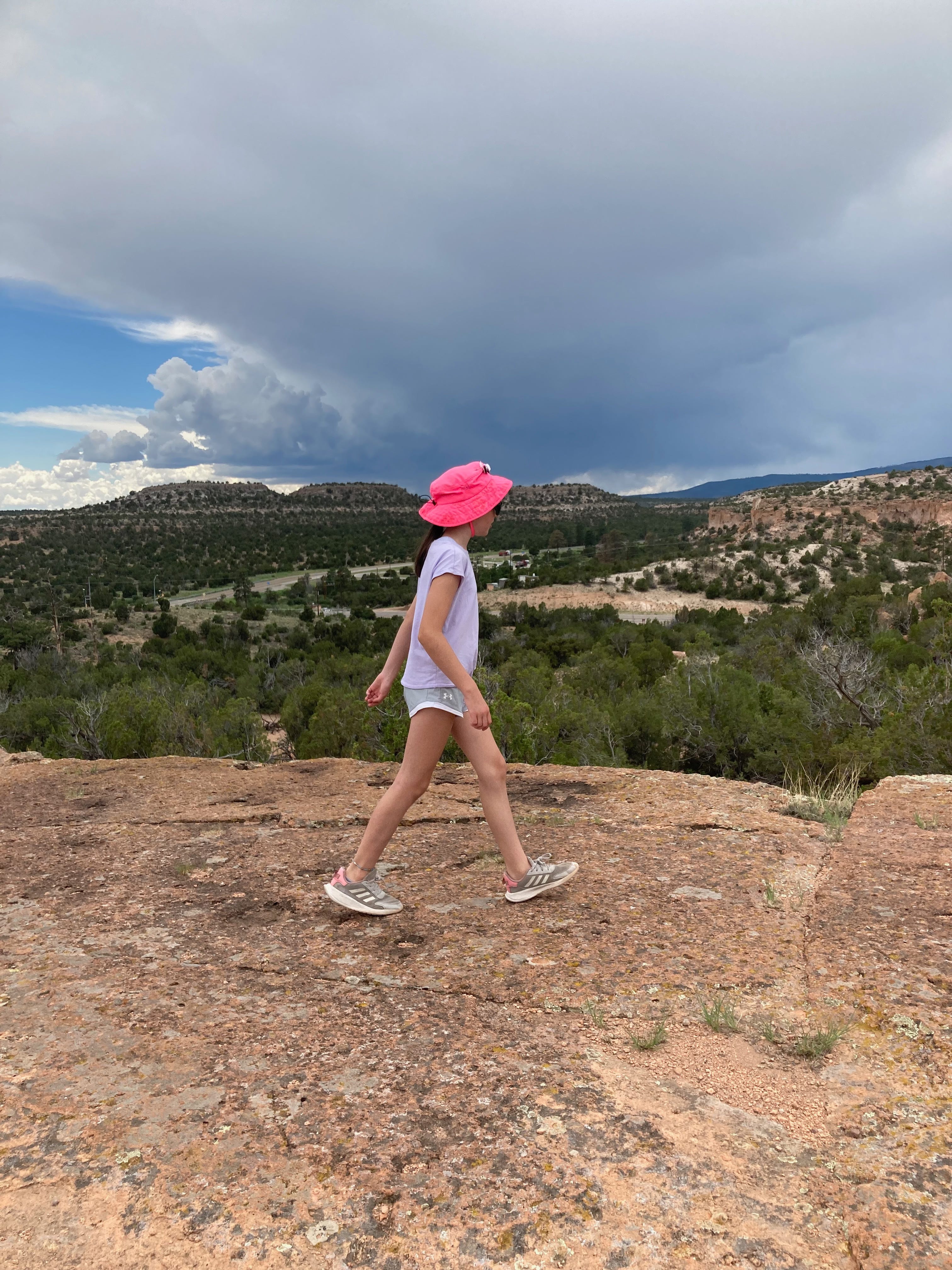
Hazel, New Mexico, 2022

“You gain strength, courage and confidence by every experience in which you really stop to look fear in the face. You are able to say to yourself, ‘I have lived through this horror. I can take the next thing that comes along.’” Eleanor Roosevelt

“The only thing we have to fear is fear itself.” Franklin D. Roosevelt

“Our greatest glory is not in never failing, but in rising up every time we fail.”
Ralph Waldo Emerson

“Do the thing you fear the most, and the death of fear is certain,” Mark Twain

My first ex-husband, Tim, lived by the words “Do the thing you fear.” It was what compelled him, at age 19, to tell me how he felt about me. I was away at my freshman year of college, and he sent me a mixed cassette tape. As I listened it became clear that it was all love songs. The clencher was Booker T’s song, “What Does It Take?” with these lyrics:

What does it take to win your love for me?
How can I make this dream come true for me?
Oh, I just got to know,
Oh, baby, ’cause I love you so

It was a grand gesture that worked! We got married in less than a year. He used it to achieve other things in life, like applying for jobs, starting his own business, or meeting someone famous (“Hi, Meat Loaf!”).

I’m thinking about this today because our second grandson, Isaac, is currently training with the Peace Corps in Tanzania, preparing to teach math to high school students. He purposely sought out a vocation of service, following in the footsteps of his dad, our son, Ben. I’ve seen Isaac climb to the tip of thin, pointed rocks, balancing as if he was on solid ground, while his mom and I averted our eyes and tried not to panic. Adventure is fun and challenging to him; I might even say he’s a bit of a daredevil.

This is not his first trip to Africa; he previously worked on a college project to provide solar lighting to a village in Uganda. Thanks to my curious and bold daughter-in-law, Suzette, my four grandsons have been to many countries and experienced other cultures. It increases their world view, allows them the ability to travel wherever they choose. They all are outgoing, curious, and easily make friends.

Like my ex, or maybe because of him, I also choose to live by the adage “Do the Thing You Fear.” I have fallen in love several times, traveled alone, and easily talk to people I don’t know. I went to a band audition once out in the country, was told to walk into the house and down the basement stairs, with no idea who was waiting there (“Hello, Toy Box,” a classic rock cover band I performed and had a blast with for several years). While writing this I realize it might have been foolish, especially with my own unhealthy interest in true crime. But my ability to do the thing I fear allowed me to bravely go to job interviews, sing in front of a lot of people, and live a life that has been exciting.

One time, on my friend Ken’s yacht in Lake Michigan, we sailed way out to a remote area away from other boats or a view of land. Ken said the water was ice cold, and then he dove in! We were with a big group, and I was the only other person who followed him into the water. It was so freakin’ freezing cold, I gasped in shock. But doing it was exhilarating and made me feel brave, like I could do anything.

In looking at my life and the experiences I’ve lived through, as in Eleanor Roosevelt’s quote, I see how forging ahead through difficulties has allowed me to keep going. I’ve lost so many loved ones to illness and tragedy, there are times I wanted to stay in bed with the covers over my head. But those moments didn’t last long. I couldn’t breathe under there, so I had to get up and move. There was no giving up, especially as I thought about those people I grieved who wanted me to live fully, and be happy.

There are things I still haven’t done…hot air balloon ride, make baklava, go to Scotland. I want to support causes that are important to me, like abolishing the death penalty. I don’t like the term “Bucket List,” but I do like life goals. I’m diligently working on publishing a poetry chapbook within the next few months, and I’m nervous and scared. I hope it’s good, that my words mean something to people,  while publicly exposing my inner thoughts.

But if I don’t do it, then I’m a writer who didn’t publish anything other than these blog posts. As a creative person, I’m compelled by forces inside of me to make art and send it out into the world. Regardless of how it’s received.

So, I challenge you, my friends, to do the thing you fear. Strong words to live by. Along with my other favorite quote, “there’s always time to go to the bathroom.” But that’s fodder for a future essay.

Hopes and Dreams

Elaine McMilian's avatarAnd Something Else

Sorting through the past and creating new narratives.

This past weekend, I opened my mom’s cedar hope chest and removed everything inside. Many times I’ve expressed the desire to move it along, but I wasn’t ready. It doesn’t really fit any rooms in my house, and it’s taking up a space where I’d like to put a chair. I’ve moved it with me to five different homes. I’ve used the hope chest as a coffee table, a TV stand, and a place to set a basket for my cat. 

My parents bought a new bedroom set, which included the hope chest, when our family moved into a big new house in the 1960s. My dad was making money as an insurance agent, and things were looking up for us then, before the divorce. For almost 30 years the hope chest sat at the end of her bed. When Mom downsized…

View original post 809 more words

Love with Grace

My eyes teared up as I read the post on social media, written by a high school friend of my son, Ben. She’s recently posted several times about her sister who is in the hospital, hanging onto life as one body function after another fails. But the information has been limited with no other details.

That is, until today when she posted a message from her sister, who revealed that she has abused drugs and alcohol for most of her adult life, and it has ravaged her body. She wants everyone to know the truth of what is happening, and why. Her desire to come clean to people she doesn’t even know caused my tears. In doing so she’s also confronting herself, her reality. She’s in crisis but alert enough to know that if she survives this, it’s a gift to start anew.

There are parts of this story that speak directly to me. My son’s friend, now a woman in her mid-40s, is a beautiful, successful, happy person with a family and fulfilling career. Her sister seems to have taken a different life path. But they have a sibling bond that is strong as one takes care of the other in this most dire circumstance.

I take care of my younger brother who is in prison. My parents died years ago, as did two other younger brothers. He has no life partner or children, only me. Now a 62-year-old man, he’s docile, introverted, settled into a sparce life in a small cell with another inmate. He works in the kitchen, reads books and magazines, and watches TV. He calls me often and I always answer, hoping it’s only because he’s lonely and not because there’s a problem. I send money and give him sisterly, and often motherly, love. “Love you bunches,” we say to each other at the end of each call.

Some people turn their backs on a troubled family member that they perceive has made bad choices or see as weak or ignorant. We make choices to protect ourselves, especially when there are long established patterns of hurt. I think I choose to help because when I look back at my family life, unlike my brothers, I was lucky to have opportunities and outside support that changed my life path. I have survivor’s guilt. How did I get so lucky? And why?

The other part of the woman’s story that I relate to is harder to reveal. In my late 30s/early 40s, as a newly single woman, I got involved with someone who drank a lot of alcohol and did cocaine. This lifestyle felt familiar to me because of my alcoholic father, and my brothers drank and used drugs. I was devastated by the loss of my marriage and found that taking such a drastic turn from my past life into one of partying helped numb my pain. Then my first grandchild was born, and I stopped doing drugs. But I was involved in a lifestyle of drinking alcohol that I continued while dealing with my ongoing circumstance. It took a few more years to break that cycle.

It wasn’t all bad; there were successes and good things of which I’m proud. I earned a college degree and performed live music. I enjoyed my work and friendships. I spent quality time with my sons and their growing families. I also had to handle hard things including several deaths, my mother’s depression, and the arrest and conviction of my brother. But I still have regrets about the past. I put myself at risk, wasted time and energy on partying and hangovers, and lost my self-control and common sense. Eventually I reclaimed my life and gave myself another chance. Again, somehow, I was blessed with luck. I am extremely lucky. I’m thankful I didn’t harm anyone else, and I found a life partner who has helped me come to terms with my past. I believe that what I went through ultimately changed me for the better.

My life experience has given me deep empathy for people. I lost my precious son Ben to brain cancer in 2004. When I visit my brother in prison, I see other inmates’ loved ones ranging in age from newborn to elderly. Each one hurts just like me. How our life will evolve begins with the luck of when and where we are born. Life is hard. Trial and error, mistakes and redemption. I understand what my son’s loving friend is going through as she sits day and night by her sister’s hospital bed, hoping for a miracle. I also understand her sister. Love with grace. Have mercy.

Toilet Paper Is the Least of Our Worries

schoollunchstockpic-pdfor

The United States is late to the party. The nation’s top leadership is unreliable, and we’re spoiled. We’ve been force-fed a superiority complex for years, meaningless against an unknown, fast moving virus for which we have no immunity. I could stay away from social media and news sources and live in a cloud of denial. Or, I could question the ramifications of the privileged way of life I live.

At the beginning of the pandemic I laughed about the toilet paper rush. The Covid-19 virus attacks lungs, not intestines. Why are people panicking over a lack of toilet paper? But as days go by and the threat of isolation looms long, I’ve started questioning my own dependence on toilet paper. For one thing, I now pay attention to how much I use. Do I really need a handful? Am I that afraid of touching my own bodily waste, created from the food I eat for nourishment?

Then I read an article written by someone outside of the U.S. who said that Americans don’t use toilet paper correctly. He listed the toilet habits of other countries, and their use of water for a thorough rinsing. He even suggested one could use soap and water…with their own hands. You’re washing your hands anyway, he said. Americans walk around with “stinky butts,” he claimed. No amount of scraping with dry toilet paper was going to help with that.

A good friend shared a personal story on social media about her upbringing in the Ozarks of rural Missouri. Her family of thirteen siblings had no inside bathroom or running water. She grew up using an outhouse and drinking water from a stream. Her main point was that she and her family survived that, and we can survive this. An incredulous reader asked what they used for toilet paper? Her answer is just what you’d expect…the siblings all vied for the index pages from the Sears catalog because they were the softest, she explained. Her post was directed at those hoarding supplies. But the overall message is that for the most part, we’re strong, resilient and adaptable.

Another friend emailed a group I’m part of and mentioned she had stocked up on facial tissue which she could use for TP if necessary. Except, I once read an article about the things we should not flush down the toilet, and the most surprising item was facial tissue. It’s made using a stronger weave of fibers that’s not meant to dissolve like toilet paper and clogs up sewer pipes. Who among us has flushed facial tissues down the toilet? I don’t now but I didn’t know any better the previous 60+ years of my life.

When I heard that schools were closing for the rest of the semester, my thoughts went to a friend, a retired teacher, who lives 70 miles outside of Kansas City. She is also a minister, and volunteers at the local food pantry serving meals and interacting with the people who utilize this service. She once told me that that over 70% of school children in that community rely on subsidized food. There are many, many issues more important than toilet paper, which is way down the list of things we can live without. As we spend more time in social isolation, watching the number of deaths rise and the financial world break down, our priorities will surely change.

In the meantime, stay home and stay safe. Wash your hands thoroughly and often. Create home projects, read books, write your memoir, make phone calls to friends and family. Ration your use of toilet paper — and everything else — while we figure this out. Peace.


An Angel on Earth

pexels-photo-586744.jpeg
Photo by Tejas Prajapati on Pexels.com

          She reached out to me online, inviting me to join a women’s holiday singing group. We connected on social media; I think she may have posted that she was looking for women harmony singers and I responded. At that time MySpace was still popular for musicians, and she found my page and listened to some of my original songs, noticing our shared love of strong harmony vocals.

We met at her house in a sketchy part of town, but that was Emily*. She loves people and lives without fear, and her neighbors seemed to watch out for her. Her home was full of reclaimed furniture and eclectic décor, reflecting her bohemian nature. The group of women she gathered were from different parts of her life, including me, a stranger that she trustingly invited into her fold.

Emily and I became instant friends, bonding over singing, arranging music, and shared life experiences. The more we talked, the more I revealed about my unhappy marriage and desire to make a change. She offered observations, but mostly she offered a kind ear as she listened to me work through my situation and possible outcomes. One night she showed up at my house in a snowstorm with a bouquet of tulips she bought at a flower shop sale. She seemed to intuit when I needed support and encouragement.

Finally, I made the decision to leave my husband and start a new life. I rented an apartment nearby and gave him the news, which went horribly. My new place wasn’t available for two weeks, so we agreed that I would sleep in the guest room as we transitioned into a separation. But our problems escalated, now heightened to a new level by my decision to move out. Living in the same house together became volatile. I was in crisis and barely breathing.

A week into this arrangement, Emily called to check on me. I had a bad headache, and she could tell I was upset. Suddenly, she said, “Hang up the phone, get into your car and come to my house. You can stay with me until your apartment is ready.” I gathered up some work clothes and incidentals and was in my car within minutes.

When I parked in front of her house, I saw white twinkling lights strewn about on the porch. Upon entering, candles flickered in the dimmed light. She guided me to the guest room, where the bed was made up, surrounded by plants and more strings of lights. It felt like walking into a spa; warm, inviting and comforting.

The next morning, I awoke to coffee, warmed slices of challah bread and the sweet tones of Joni Mitchell. We sat together, chatting about our schedules and planned to meet back at the house that evening for dinner. The rest of the week went on like this as I rested, cleared my head and made plans for my future.

That was a little over ten years ago. I don’t see Emily as much these days, as both of our lives evolved and grew in different directions. She surfaces once in awhile to invite me to vocal concerts or to do something fun, usually spur-of-the-moment, as is her way. Once she called out of the blue to see if I could pick her up from the airport after a trip overseas. “Of course!” I said. Recently she texted, asking if I could meet her at a recording studio to record vocals for a song she wrote to be included in a Jewish anthology of music. I was there in an hour. I’m happy to do anything she asks. Emily is a true example of an angel on earth, and I’m forever thankful for her presence in my life.

*Emily also appears in my story, “Changing My Attitude.”

So You Want My Return Business? Try Great Customer Service

money 2